Thursday, July 17, 2008

University of Oxford Bodleian Library


“The train is rolling down the track,
Listen to the wheels go clickety clack,
Over the bridge, around the bend,
Taking me for a ride.”
Phil Rosenthal, The Green Grass Grew All Around

On the Road Again: From Paddington Station to Oxford we Go!

An early morning walk to the underground train (the Tube) at Waterloo station nearest King’s College’s Stamford Street dormitories to make a quick transfer from the Northern line to the Bakerloo Line brought the SLIS class of 14 directly to Paddington Station (15 with teacher!). Once there with ample time to browse for a short spell, we spread out to do such things as get coffee, shop, and take pictures of the well known Paddington Bear Bronze statue for about fifteen minutes prior to meeting up in front of the train station for departure. Paddington Station is named for the famous Paddington Bear created by the English writer Michael Bond half a century ago. The fictional story of the famous Paddington Bear whose story began when the bear was left at Paddington Station and taken from the ‘lost and found’ is of a bear that wears a duffle coat and a shapeless hat and lives with the adoptive Brown family at 32 Windsor Gardens. There was a precious little commemorative Paddington Bear gift shop that many students stopped at to either buy travel gifts for the younger ones at home or just to preview the cute little stuffed Paddington bears and other miscellaneous Paddington items. Most everyone grabbed a coffee or a quick breakfast to fully fuel up prior to what seemed to be a full day ahead.

Once the group met up following the brief leisure time at Paddington station, the train tickets to Oxford were dispersed and we headed towards the train to mount. The smooth sailing, hour-long journey was a scenic ride through the countryside. Arrival at Oxford came swiftly after chatting with my next door dorm neighbour Sheila and reading over the informational handout nicely given to us by our professor that offered a history of Oxford with additional information on Oxford tours and walks available to us following our scheduled library visit. Reading about Oxford has given me a preview of a city that is very famous for its university and historically for housing and educating students.

Origins of the ‘Old and New’ Bodleian Library: Continued Growth and Union with the Radcliff Library Collections

The Bodleian Library at Oxford University is the chief deposit library as it opened in 1602 and incorporated in the book collections of the Duke of Gloucester from the earlier library in the fifteenth century. Serving students and scholars worldwide, Oxford University’s Bodleian Library is the second largest library in the United Kingdom and is centrally located in the academic heart of the campus. The library was initially funded by Thomas de Cobham, the Bishop of Worchester. It moved to a new space as a gift to the University by the younger brother of King Henry V, the Duke of Gloucester. The library was given his original manuscripts and classical text volumes. The overcrowding this created dictated the construction of a new location in 1444, north of the campus, above the Divinity School that was completed in 1488. This Duke Humfrey’s library survived for over 60 years as it was until books were purged that had traces of Catholicism and superstition as ordered by King Edward VI. Because the university funding to restore the collection was lacking for the library, Sir Thomas Bodley donated large sums of money in 1598 and his new collection of 2,500 books to the library. Of importance to the re-building of the library collection was that in 1610, Bodley arranged a contract with the Stationer’s Company of London to receive one copy of every book published in England and registered with the Stationer’s Hall. Because this created a challenging situation due to the space needed to store such an ever expanding collection, Bodley funded and carefully planned the first extension of the medieval building in 1610, called the Arts End. There were numerous other extensions to follow that came about after his death, most notably the will mandated an enormous amount of money would be used to create a storage site for books on the third floor and also became a photo gallery and museum for the institution. The later Seldon End extension to the library came about in 1634, following a large book donation to the University by the attorney John Seldon. He donated over 8,000 books to an ever-growing library collection. It was because of this extension that the library was able to accept other book and manuscript gifts. Some notable donations were made by those such as the third Earl of Pembroke in 1629, Sir Kenelm Digby in 1634, and William Laud-Archbishop of Canterbury in 1635. Of interest is that this library is not a lending library and that even King Charles I was refused borrowing rights in 1645!

Following a drought in University funding of the library in the early eighteenth century, collections development disappointingly slowed until a very successful Dr. John Radcliffe, an English Physician, donated a tremendous sum of money to purchase land for a new building on the southern side of the campus quadrangle, with enough money to pay a librarian and buy more books. What came about is the construction of the classical circular domed building that opened in 1749. What was then called the Radcliffe Library grew to incorporate a collection that sparked a new interest in its patrons with items on the subjects of sciences and natural history following a waning period of non-use and lack of readers. Because the Bodleian collections continued to grow due to gifts and ample funding, ground level lecture rooms were taken over for library use and storage in 1788. A union of the Bodleian and the Radcliffe libraries were united in 1860, with a reading room on the upper level and the stacks on the ground floor. By 1914, the collection was growing beyond the million mark per year. An underground storage area was a critical formation to help with the storage issues and was called the underground book store that was known to be the largest in the world at the time. In 1931, an enormous extension of the library took place, with a new building, the New Bodleian, being constructed in 1937. It is not open to the public, is more urban in structure and houses stacks, reading rooms, offices and a specialized library. The collection at the Bodleian Library maintains not only books and manuscripts, but pictures, coins, medals, sculpture, scientific objects and objects of other historical or eclectic interests. An underground tunnel with a conveyor helps to transport the books and other items to the library for reading and research purposes within the patron reading rooms.

With a mission to maintain and develop the collections and services offered by the library, it was Sir Thomas Bodley’s goal to support the teaching and research needs of the University and scholarly patrons nationally and internationally. The Friends of the Bodleian Library proudly aid Oxford University in continued restoration and growth efforts by raising the funds to enrich collections and other items that the library would not have been able to afford otherwise. In turn, these efforts strengthen the library’s opportunities to acquire outside funding sources, such as grants.

A Tour by Mr. Sydney Hicks, Bodleian Library Docent:

After doing some extensive reading on this library, the tour given by a Mr. Sydney Hicks was a nice introduction to this academic and deposit library at Oxford University. He told our group that the library was 400 years old and founded in 1602 by Sir Thomas Bodley with a goal of serving scholars around the world. For statistical purposes, he told us that over 5,000 readers use the library daily, with only 5 percent living outside of the United Kingdom. He let us know he would introduce how the library is surviving in the new age of digitization. Introducing the library as a reading library, it offers nine separate reading rooms throughout Oxford.

The Collection:

Of surprise to me was the fact that the Bodleian Library provides documents signed by Queen Elizabeth I and electronic resources. It is one goal of the library to extend the electronic collections through purchase agreements with other academic institutions and other publishers. According to Mr. Sydney Hicks, the much broader digital goal is to “digitize everything” in the collection! The collection comprises over nine million printed books, over one million maps, over one and a half million pieces of ephemera (ie. Postcards, leaflets, pamphlets) well over three and a quarter million prints, and more than 10,000 pieces of music. So far the library has digitized over one million books, mimicking the huge digital project in order at GOOGLE. Mr. Hicks stated that the library will digitize the collection jointly with other like institutions to broaden access to the collections for research needs.

The Bodleian Library is a legal depository and is entitled to receive, as I have stated in the background history, a free copy of all published works in the United Kingdom. Of popular interest, the library has all of the Harry Potter books and related books with Latin translations, housed in the Infirmary Room. With religious influences in the collection, the library motto is “the Lord is my Light”.

Highlight on the Value of Digitization Efforts:

Mr. Hicks offered the pro’s of digitization of the Bodleian Library collection. He stated that the library was concerned with advancing the accessibility of the collection and all of its advantages. Of notable mention is the desire for a more searchable database with enhanced resolution that is useful for patrons. More information on digitization is forthcoming and will follow the new Bodleian library discussion in this journal entry (See: Digitization Continues).

The Building up of a New Bodleian Library:

The core of the building was explained to having beginnings with the Divinity School. The School was built in 1420 and for 50 years was a lecture theatre. Historically, the funding to build the library took much time with the ongoing war to complete the building plans. Formerly, the college offered subjects on divinity/theology and housed a library above, pre-dating the Bodleian Library. The collection maintained recommended European manuscripts. The intricately elaborate interior ceiling of what was the Divinity School has undergone some alterations as well as other parts of the room, including the replacing of the smashed stained glass windows that occurred after the Reformation. The many unique heraldic symbols found on the ceilings in the interior of what was the Divinity School offered initials and religious images. Examples of the very ornate and well intact/preserved symbols are the Holy Trinity, Coats of Arms for those individuals such as found for the Kemp families, the Bishop of London, pagan and secular images, and a Mother Mary and Christ Child carved boss over a crescent moon and surrounded by sun rays. According to our tour guide Sydney Hicks, the donor John Kemp, who gave a tremendous sum of money for the library and is even today, still mentioned in Church services! This Divinity School room was a classroom that had wooden desks and a large pulpit remaining. I was very surprised with the good condition that the furniture was in over the course of time. The ceiling itself remained intact and survived as the result of its flat construction, with the pressure from the library above diverting the pressure/weight onto the arched posts along the edges of the room. The symbols found on the ceiling had some damage during the reformation, as the crucifix was taken off by the extremists/reformists. The carved boss of St. John was testament to this, as he was beheaded.


The room leading into the Convocation Room (meaning “congregation” room) was an authentic parliament room that used to be the main governing body and housed 1630 furnishings. Mr. Hicks told our group that today this room houses the election of the University Chancellor. The size of the room is too small for larger numbers of people such as needed for the members of the Parliament or the European Committee. Interestingly, we learned that Nelson Mandela received his degree there, and oddly a wedding party and disco party was held in the room, having rented it out the room for the special events.

Up-Up-Upstairs and Away: More about the Bodleian Library Collection and Building

The venture up to the Bodleian Library upstairs was quite a climb up the steep stairwell! Our tour guide let us know that it is the oldest university research library in the country and second to the British Library. He told us that with the growth the library has seen with benefactors, many books, documents and letters from the 1640’s/ Civil War period was acquired from their own collections and that new purchases were made for the library as well by the benefactors. Over 3,000 new books come in a week currently and according to our guide the increases in the CD collection are mounting amazingly to over 20,000 per week. I wondered if I wrote or heard that number incorrectly!

The group was lead to the East End that was opened up for books years ago. The items are chained to the lecturns (bookshelves) interestingly and even King Edward VI who accessed the collection was unable to check them out as the items were bound to the building and not accessible to patrons with lending rights. Yet, it was the king whom later dictated that some of the religious books (Catholic) were to be either dispersed, destroyed (burned), or given to the government. Some of the bindings were sold, but many were destroyed, so the collections were depleted. It was then that Bodley as a former student there, later a lecturer, linguist and ambassador for Queen Elizabeth I, had a desire to do something for his country. He was a wealthy and successful merchant with family money (two fortunes), so with the will and desire to help, he decided to rebuild the ceiling/roof of the Library and all new bookcases were put in. Additionally, Bodley purchased over 2,000 volumes of scholarly books in many languages. According to our guide, Bodley decided to think globally with the library. He started a catalog to make the collection more accessible for patrons from all over and may be why scholars came from all over Europe to use the collection. It was about this time of renovation that the books had to be chained to the lecterns in order to protect the library collection. As an aside to illustrate the oddity, yet importance of chaining books to the bookshelves, Mr. Hicks told the group that it was about 1610 when Bodley bought 1,000 books and correspondingly 1,000 chains! Books were chained at the Bodleian Library for over 200years! In a positive light, this chaining of books in turn encouraged the benefactors to give more money!

A Glimpse of the Collection and Services:

Patrons are allowed to request items in the collection for research work but may not check them out. Request slips are used by library workers to help locate items pulled from the shelves. We located some of these very slips sticking out from the stacks to mark to spot of insertion for the library staff that will bring the item back. We were told that as of today, there are now over 30 reading rooms for patrons. In the book stacks that are housed in the underground room across the street, a conveyer belt is found that can hold over three million items to transfer to patrons from the requesting locations. Due to the size of the collection and the location, it can take up to three hours to receive an item, so a patron must be patient and agreeable to wait. Our guide mentioned that a very valuable and precious item in this underground collection is the Magna Carta!! It is stored on the J floor. The New Bodleian Library is a storehouse of many precious items such as this, yet other parts of the collection are stored in other facilities because there are too many books and extensions have to be continually built.

Digitization Continues:

To finish up with digitization, this elderly guide was surprisingly taken with the topic and how the Bodleian library of modern times is handling and keeping up with modern library access issues given the Internet. The Bodleian library is involved with digitization through the American Institute’s Folger Library to digitize Shakespeare plays for conservational purposes to align with Bodley’s mission to advantageously make the collection globally accessible. Of items that will or have been digitized are books of plays that have shown high use with considerable wear and tear due to reader interaction that indicates something about its age and popularity. The goal is to digitize all collections in order to meet with the library visions, but since the library receives free copies of all published works in the UK, this is a daunting task!

Storage and Preservation:

A more reasonable goal is one that strives to build a new depository to hold 8.2 million books. This depository aims to offer robotic assistance in collecting books! The storage space aims to offer an environment conducive to preservation with an offer of a very low oxygen content to slow the decay of materials, lessen the chances of fire and deter insects in the felt. All items in this room will be placed into preservation boxes to protect the books.

Tyack, G. (2005). The Oxford Bodleian library. Oxford: University of Oxford.

Websites of Interest:

The City of Oxford


Bodleian Library

Paddington Bear

The World's Largest Print Store: Posters, Prints & Frames/Search: Bodleian

Wednesday, July 16, 2008

Greenwich National Maritime Museum, Caird Library


A Boat Ride to Greenwich:

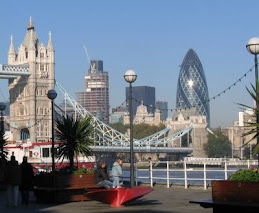
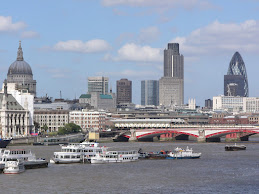
It was at a lovely morning to ride on the City Cruise down the River Thames from Central London to Greenwich on our way to the National Maritime Museum Library. With my iPod music to enjoy, I leaned over the side of the boat to absorb the wind in my face and the views of the city. There were many spectacular sights of buildings as we sailed ahead, such as a stream of high rise buildings, museums, churches, towers and other famous sites, some under construction and others standing in all of their glory and grandeur. Of special interest to me was the well known and debated construction, the Gherkin. I have learned that many locals have historically found this structure distasteful and quite an eye sore, most probably giving the building its nick-name from the Gherkin, a pickled cucumber, due to its odd shape. I have also read much earlier that this building may have been given its name for its phallic appearance. I find the building built by Sir Norman Foster in the main financial district of London quite striking, and can completely understand how it was voted the most admired new building in the world in 2006 in a survey by the world’s largest architect firms, according to my brother the Architect in New York city at the architectural firm Skidmore, Owens and Guidry. Other exciting structures to view from the cruise down the River Thames was Shakespeare’s Globe Theater, St. Paul’s Cathedral, the Tower of London and the London Bridge. My next walking tours will hopefully be the London Bridge and Jack the Ripper!!

To get back to business, we exited the boat and I was once again in Greenwich, having visited there once prior on my very first London Alive tour. It was just as I had left it one week ago, the beautiful London Borough of Greenwich revealing its wealth through interesting buildings, monuments and touristy sites as a product of its Royal connections. There are many famous sites here in Greenwich, such as the Queen’s house, originally a part of the Royal Palace of Palentia, as well as the Greenwich Park, the Old Royal Naval College, the Old Greenwich Royal Observatory which is the site of the prime meridian (0 degrees longitude), St. Alfeges Church and the Trafalgar Tavern as but just a few examples of structures of historical and architectural interest.

Through The Caird Library Reception to the Rotunda within:

Our initial tour guide was Hannah Dunmow, whom is the Archives and Manuscripts Manager of the Caird Library. The reference library that covers every aspect of maritime history imaginable was named after Sir James Caird, a very wealthy Scottish industrialist, entrepreneur, and philanthropist. He acquired the core of the collections at Caird Library and donated other monies to ensure its development. With the enormous wealth he acquired from his industriousness, a personal collection of historical artifacts, rare books, nautical instruments, globes, paintings, works of art and amazing ship models became a significant part of the museum and library collection.


In the travertine stone Rotunda, a marble bust of Sir James Caird was stationed in the direct center of the room in honor of him. This beautiful, small, and round rotunda made of one of my favorite stones is closed off from the library, but is an entry way/direct connect to it, aiming to have patrons reflect and respect the founder as one passes through. Now sitting in the library near the Registration Desk on bean bags, Hannah introduced the class to the library as the largest maritime museum in history with a core collection of:
•Navigation
•Piracy
•Astronomy
•Lists of shipping companies, agents and wrecks
•Horology
•The Royal and Merchant Navy List
•Heraldry (for searching for information about families and ships)
•Lloyd’s Registers (Captain Register)
*Microfilms
*Master’s Lists
•Lloyd’s Registry of Facts
•Annotated List of Warships

More about the Collections:

Many of these items are a part of the special collections found at this library, to include rare printed items, maps, charts and atlases dating back to 1430. The collection of manuscripts consist of papers and illustrated diaries, records, papers and logs as well as periodical files such as a few listed above (Lloyd’s, lists) offer value to an already very valuable collection that properly registered patrons may be able to access for research purposes. The Caird library offers research guides, collection websites, curators, library specialists and manuscripts staff to assist patrons in carrying out personal research. With a collection of over two million items, it is of value that trained library staff are available to help with all research needs. Of further value is the offer of an online collections database as an ongoing special library project that is expanding in access to provide more than 12,000 items.

For more specifics of the breakdown of the collection, there are approximately 100,00books, from 1850 on up (considered the modern books!) and over 20,000 pamphlets. Some of these are catalogued, yet most are not as the collection is too large and would be a cumbersome, laborious project! Of interest, Hannah let us know that close to 200 are considered current, all of course focusing on maritime history. Let me not forget to mention that the periodicals include many journals and magazines and the rare books were explained to range in date from 1474 to 1850. The “working collection” are those items from 1850 forward. Some of these items are not displayed, but securely stored for retrieval. Hannah stated that there are no special retrieval practices, other than that all staff retrieve items for registered patrons. They do ask for a two week notice for manuscripts and objects.

The Patrons, Registration, Patron Access and the Staff:

The patrons do not have to be an 'academic' to use the library. All that is needed to use the library is a visitation at the Registration/Reception Desk to get a Registration Ticket and show some identification. Once this is completed, patrons can enter the library. A comprehensive catalog is provided and accessible from the Registration room from a series of computers made available to provide Internet access. The museum object database is nicely adapted to fit into the archives and manuscript database. The manuscripts still in the catalog today are being separated out now to be included in this database. Presently, this is an ongoing project, as stated before.

For statistical purposes, our tour guide informed us that on average, between 3,000 to 4,000 patrons come into the library each year. There are up to 20,000 information requests at the reception/inquiries desk per year. Approximately 2,000 library items are retrieved and 5,000 manuscripts are retrieved. The items are stocked by professional librarians, archivists and library specialists. Everyone that is library staff is considered a library specialist or archivist. Each staff has time with the public and they rotate out time when dealing with the public. There are six full-time staff members to consist of three specialists, two technicians and one information specialist. In addition to that number, there is one head librarian.

Ancient Books: A special viewing by Rene and Mike


The special collections included old books that were spread out on a table in a Board Room for our viewing and handing with care. With two group discussions going on at the same time, the class was divided and completed in time for the board members and staff waiting outside to come into the room for a meeting. Renee Oir the Digital Services Librarian discussed the rare books for my first introduction to the rare book collection. She gave us insight into the essays found in a rare book in the special collections on navigation from 1748. The writings were of a period of instrument making during this time. It was of original binding and published by the Dutch, with a cover of Dutch Gilt or flowered papers. Items such as this one, were Dutch imported, confusingly originating from Germany or Italy. There was a religious motif on this item with flowering textures. It was spine labeled for preservation purposes so that the label itself was like a bookmark in that it marked the spot, identified the item, and did not stick to the book. This collection of essays concerned the improvement of navigation and of the many advances relating to instrument makers and instruments of this time period during a period of many transitions in navigation that dates back to the mid 18th century.

Of interest in this collection were also accounts of the Pirate William Kent. There was a transcript of what was said by this privateer from the year 1695 on up. He was hanged on the 23rd of May and left a hefty sum of money which was confiscated. This money was eventually left to help fund the school for girls in Greenwich around the corner from where this library is located.

Examples of other items of interest during this sample presentation of rare books in the Caird library collection was a rare ship bounty book owned by a surgeon dating back to 1779. A Sea Grammar book of John Smith was also reviewed to offer information from his lifetime experience and personal accounts as a guide for young sea-men on such things as how to build a ship, how to begin fighting, and how to throw men overboard for examples! This account really brings the literature and pirate movies to life as well as offers a historical account of colonization and religion from a man who was an advocate of it as well as publishing his seafaring experiences to make a living.

Mike Bevan, a librarian who works on the manuscript team, followed with the other half of the introduction of the rare book collections. The documents were found to be preserved by enclosure into sleeves with the documents divided by surname and alphabetized. We were shown another selection of rare books, with some on privacy issues relating to the spying that took place on the Spanish Armada! In this particular item, information was relayed of specific places and people.

The tour ended with ample time given to tour the museum independently. There were many items relating to navigation to include one of the world’s finest collections of 3,200 fantastic ship models that were owned by the wealthy Sir John Caird with many images/photographs, films, charts, maps and navigational instruments that offer historical items relating to navigation, seafaring and time measurement. Of additional value are the digital archival collections, consisting of over 9,000 objects and 20,000 images that are searchable in a database alphabetically by type.
What I found to be very helpful about this library is the fact one can use the library to conduct research by accessing a variety of research guides related to maritime. I am particularly interested in the historical accounts of the events surrounding the Titanic and after reading the physical displays and the library website digital guides, I found some interesting statistical facts about the ship itself such as the passenger crew, number of lifeboats and tonnage for examples and a timeline of significant dates. I learned that the 2,228 people boarded the Titanic when the vessel left Queenstown and that there were losses of 1,523 passengers and 688 crew members. Of help for patrons in need of more research on the subject from the collection or principle records maintained by the special collection for tracing family histories or in depth research, the National Maritime Reference Library offers a full range of maritime historical materials to preview.

Bold, J., Bradbeer, C., & van der Merwe , P. (2002). Maritime Greenwich a world heritage site: the Official guide. Greenwich: English Heritage.


Helpful Websites:


Caird Library

Greenwich

Royal Observatory

Tuesday, July 15, 2008

National Art Library, Victoria & Albert Museum


(Outdoor Gardens, Pond and Fountains)

A Beautiful Day to Visit the National Art Library:

The class made a quick trip via the Northern Line to the Jubilee Line and then to the District Line, with a jump off at the South Kensington stop. The National Art Library at the Victoria and Albert Museum was our destination and once there, discovered a beautiful facility, yet it was almost a shame to leave the gorgeous blue skies to be inside for a few hours. We were all very thrilled to take this tour though, and get a taste through a hands on experience and tour through a special presentation of the collection.

The Victoria & Albert Museum and the Tour:

The entrance into the Victoria & Albert (V & A) Museum from the subway or “Tube” as I should more correctly say it in British terminology, was a grand one. The building was fabulously ornate with all of the woodwork, decorative trim and mouldings that just took my breath away. I only hope that my videos I take can capture a part of what I am viewing today to share with my friends, family and others. I am still very disappointed that my camera is broken and I have to reply 100% on my flip video to embellish my blogsite. I just hate the thought of purchasing a camera here in England that equates to over $500. Arrrghhh!!

Welcome Francis Warrell, Assistant Librarian:

Our tour guide was surprisingly a very young librarian who had been employed with the Victoria and Albert Museum for six months. Regardless of her short time there, it was obvious she knew the collection and all there was to know about the library! My only concern was her soft spoken voice and the fact that like myself, not everyone would catch everything she said. I am another individual who has a soft voice, so it is something that I am concerned with at work, as I have to project my voice quite a bit. Because I teach 6 computer classes at the public library presently, I have to turn on that radio personality and pump up the volume. With three hours per class taught, my voice is tested! It is something I have had to learn and comes with working with the public. While I recognize the fact she is a young Librarian and I am not, possibly this may come with age, maturity and experience?? Anyway, I wish she would have turned up the volume and I did not want to be rude and ask her to do so!

A Tour Through the Library: Levels 1, 2, & 3

The National Art Library offers the national collection of documentary art, craft and design and the largest of its type in the United Kingdom. The library offers a research collection that is open for patrons to use as a reference library. Mrs. Warrell quietly lead the class into the Reading Room and warned us to keep as quiet as possible as there were many studying and working. At the other end of the room was a Registration Desk, where we were told that people can register as a patron for up to three years or for one month. She let us know that there are two main public areas, of which we were in one. There is a fairly large special collections base at this library and a staff member can simply collect items for a patron by showing a form of identification. At the Inquiries Desk, a bit further down in the same room, a patron could get assistance and access reference resources, art indexes in digital and book format, and databases of museum objects with the assistance of a staff member here. Francis stated that patrons have access to a copier or “reprographic” for 15 to 20 pence per copy. Photo prints can be obtained from a special printer and are helpful when using large books and journals. Francis said the journals date back to the 1930’s.

Retrieving Items for Patron Use:

Next, we entered a new room that stemmed from a public access area. This zone was for staff purposes only and was used by “Retrieval Staff”. The staff retrieve items and make available each hour and half hour by placing in a designated area that is really a historic holding system for items. The use of the Dewey Decimal System is put into place with this collection to help organize items in the collection. To start the retrieval process, a “Triplicate” form or Slip needed filling out. These slips held up to six items at a time. The slips come through a wooden open shelving area that was a go between the staff area and the public area. This is the historic area of the library I was speaking of that has not changed and still serves an important purpose even today. The staff retrieves the ticket and then the item(s), to placed with the slip upon arrival in the "open hatch" as our tour guide coined it.

Periodical Stacks:

The next room visited was the periodical room, which was a comfortable and cool one. There are over 8,000 titles, with over 2,000 items that are current. Most of them are bound, mostly hard copies used for exhibitions and for curator use. This binding serves a purpose in preservation and keeps the items in good condition. The librarian told us that presently the library is not binding everything due to budgetary constraints, as is a common problem with libraries in the United States. She explained that by keeping some of the periodicals individual, not bound in the typical annual bindings, this actually helped to better show the piece at exhibitions!

Our venture Upstairs:

The upper level of the library was installed in the year 1966, and initially served as a storage space. There were many filing cabinets and cases and per Mrs. Warrell, required the challenge of managing/using a host of keys in locking each unit. The collection stored here offered items dating back to medieval manuscripts of the nineteenth century. We were informed that the arts books are the largest collection in England! Artists such as Mulan and Forester (a great friend of Shakespeare) were revealed in this collection through historical art works. Shakespeare’s folios are also represented! This library also has original proofs of most of Dickens novels!!

Up to the Balcony we Go and What is found in the Collection:

The view from the balcony was a good one that overlooked the three galleries. The collection above was a special collection as it offered items dating back to 1850 of the Great Exhibition. Other items in the collection of over two million items also include: Art & Design; textiles; sculpture, catalogs dating back from 1851 and items from Asia for some examples. The collection was established in 1837 and was earlier stored at the Summerset House. This was the facility across the Waterloo Bridge, north of our dormitory home on Stamford Street. The beautiful Summerset House was the location of a lovely welcome party for the British Studies students by King’s College. Everyone dressed in their finest clothes brought on the trip for the event!

The West Room:

It was in the next room that we entered that we observed and learned that this room was being cleared out for a new space to house 20th century books and artifacts. The aging collection found left on the top shelves are partly the Gilbert collection from the Albert House. The items were mostly grouped by subject, but not so much anymore, as they are stored in what the young librarian called a boiler cabinet(?). Basically a hidden wooden bookshelf with moulding for a door. Below was pointed out a crypt of books as another mode of storage of the ancient collection that is not accessed as often. There are actually two hour runs for these items, but this does not occur very regularly. When asked about preservation of the well used, somewhat tattered ancient items found on the book shelves above, Francis stated that there is less budget to conduct adequate preservation and that students and a conservation department is involved in repairing books.

We were directed to look at the shelving area where staff is allowed to bring home reference materials. This was another behind-the-scenes room where one could find many boxes. Francis discussed what on site access entailed, that of circulation, interlibrary loans and visits. She explained that off site access is what is found in the three boxes found in this room.

Cataloging and Acquisitions:

It was of interest to me to learn that the library had access to quite a bit of money to spend on acquisitions and she said stated, the library must “keep buying to keep the budget up.” All items in the collection are retrievable as each item is catalogued and therefore well organized. The requests for catalogued items are done by a data order.

At the end of this room, we came to an area where there were many boxes that we learned were gifts to the library. We were told about the Exchange Program with other Art museums around the world. Interestingly, the British Library donates to them. Upon reaching this room, posted on the wall was a list of four library values that our teacher Dr. Welsh observed:

• Generous
• Coherent
• Rigorous
• Imaginative

A Steep Climb to the Tippity Top: Floor 3

On the third floor was “the stacks” that housed exhibition catalogs (75%) predominantly, which was considered an expansive collection and dated back to the 18th century. This collection was originally organized by: country; gallery; and year. More recently items, are organized by size, as it appears to be a common theme in the libraries we have toured so far. A large percentage of items cover all languages, yet mostly German and French.

Prints & Drawings Study Room: For Our Eyes Only

The special collection books found in this room were a special display for our viewing on this tour and was meant to highlight very special items in the collection of historical and some of literary significance. The items offer an account of the history of the library and museum. To list some of the wonderful items displayed and allowed to view/touch were:

•Diary with maps/illustrations
•Jonathan Swifts copies of Gulliver’s Travels
•Islamic volumes, only beautiful binding remaining dating from Victorian period
•Sales catalogs
•Sketch books
•David Copper$ proofs (Dickens writings)
•Artists books, made from Rabbit Pelts
•Detroit Book, innocent pink cover with gun as bookmark and reference to body parts within; a book of murder and crime.

Preservation/Conservation:

The preservation room is a separate area where library staff try their best to keep the collection in its present state, yet with budgetary constraints and the size of the collection, this was a daunting task. Mrs. Warrell showed us a conservation box that would be considered the first phase of conservation, where individual items are place within. Depending on the item and its size, placement could be placed in a number of different holders to preserve the item (second phase) such as: dust jackets and ties, envelopes with plastic covers for paper sleeves. There were many letters to be preserved and some were even pasted into a book, yet that is not a practise carried out anymore. It was interesting to see that microfiche was another storage medium that used to be used (1920’s) to store items, but that is not carried out anymore. My favourite item to actually hold and relish was Leonardo Da Vinci’s facsimile of 1 of 3 volumes of notes, that consisted of his writings, diagrams and drawings!

Websites of Interest:

National Art Library at the Victoria & Albert Museum

Monday, July 14, 2008

Museum of London


Week Two: Tour of the Museum of London

I would have to dub this day the prettiest one we have had in London! The skies were blue and there was a light wind swirling around that was very comfortable for the walk about London. The morning was perfect for a stroll towards the Museum of London. By now, the class as a whole is maneuvering around London with much more ease and feeling quite a bit more confident in our travels on the Tube to wherever our destination may be. Arriving at the Museum, somewhere very near to the Barbican Lending Library toured last week, it was obvious that the building was modern and I wondered to myself about the type of historical collections and displays that we would view. The group was lead into a room to meet our tour guide and it was apparent that there was going to be a private introduction before touring the collection.


Meet Jon Cotton, Senior Curator:

Mr. Jon Cotton, the Senior Curator over pre-history at the museum showed the class a slideshow put together in order to offer us a bit of an understanding of the gallery through a description of the thinking that underlies the gallery. He informed us that this gallery is the “London Before London Gallery” (450,000 BC – c. AD 50).

Background History of the Museum:

In the 1960’s and 1970’s, the prior Museum of London building was bursting at the seams, so a newer and larger building was in order to offer ample spacing to grow and spread out. A newer building was a need and Mr. Cotton stated that the museum “aimed to be a one-time stop shop" where the main collection of London history would be housed. I learned that the Museum is one part of two institutions: (1.) The Guildhall Museum; and the (2.) London Museum. The Guildhall Museum originated in the 1920’s and deals with the city of London. The London museum is a private institution and originated in 1911. Both of these organizations came together in the 1970’s at the current site. Mr. Cotton stated that London libraries are statutory, yet museums are not, so there may be some existing tensions.

In the year of 2000, the museum came into its second site. Jon went on to discuss the story of London as a Roman port. Out of interest, he stepped ahead in London time to also mention a famous London story and display of Jack the Ripper to tell the story of London in the 1880’s. He mentioned how this gruesome display offered photos of the victims and mortuary in London.

The third site of the Museum of London (LAARC) houses the archeological archives of London with over 5,000 site records of primary data such as drawings, records, and information on the great fire of 1666. This site is the oldest of the three sites, with reference to the collection.

Marketing the Prehistoric London Collection:

The Museum of London is the world’s largest urban history museum. Jon explained that the urbanism aspect of this library is to send out the message to “come and visit us.” Urban is to a settlement as in Roman times. Our tour guide said that in his work he deals with everything prior to the Roman times, so it is interesting to him that he deals with the archeological archives of London with this collection.

Visitor Patrons/Demographics:

The majority of the patrons who come to visit the Museum of London are foreign tourists, mostly English. The numbers of Londoners attending the museum though, are steadily increasing. Approximately 40,000 visitors attend each year, with 50% being Londoners and school children, about 10% are British non-tourists, and 40% are tourists. When thinking of what people love to see when they come to London, Jon mentioned things dealing with Victorian Life and Roman Life. He then proceeded to show us an image of the Rose Theater, the precursor to the Globe Theater which burned down. The Rose Theater can today be found and is preserved in the basement of an office block! The present Globe can be found immediately around the corner. :)

Key Thoughts on when Pre-history begins and what it deals with:

Mr. Cotton then discussed ‘pre-history’ conceptions by many patrons and when asked for initial responses of what prehistory means to them, he typically discovers that people think dinosaurs for one response fit that category. Yet, the Museum of London does not cover the period when dinosaurs existed, but the time before written records, before Romans arrived. Mr. Cotton confirmed what I had already assumed that prehistory is relative to where one is in the world.

Two key thoughts our tour guide told us to keep in mind as we go through the museum is to think of pre-historic as “people”. He analogy of the television personality Ray Miess who survives the wild and trains others in survival techniques is who we were instructed to think of when we think of prehistory in terms of the collection at the Museum of London. The items in the collection reveal people as individuals who are adaptable in response to environmental elements for one. These are the kind of people that are reflected in the collection.

The Landscape of the Collection and what it May Reveal:

In 1998, the former director wanted to do a display on the changing faces and bodies of prehistoric and modern Londoners. Some examples of the collection dated back to 3,000 BC. One item was a pot found in the Thames River. The pot itself gives ideas of man from the hand decor, as there were holes, thumbprints and pinch marks used to decorate it. A mold of the hole in the pot was made and revealed the finger of what was thought to be a woman, as women did this sort of work. It was thought that it was her pinky or index finger because it was slender. There were some preconceptions that were amazingly made of man from this time period due to the discovery of one little pot with hand decor. This is the nature of the work of finding out the secrets of man through self discovery in located objects in London. Mr. Cotton astutely stated that the landscape can move or effect us and offer the power of place. A prime example is Stonehenge which evokes many feelings in us. Seahenge was another remarkable piece of landscape, with a circule of ancient (early bronze age) timbers projecting from the sands North of Norfolk, that still generates “heat, interest, and feeling” as does the collection at the Museum of London. Seahinge was excavated and is a very remote and special or sacred area. Interestingly, there is quite a bit of conflict that revolves around the excavation at Seahenge, as the locals want the archaeologists to leave it alone so that it may decay naturally over time.

The Thames River: How it ties into the Collection and the Building

The Thames River is a major London landscape feature. It is a sacred River that runs North and south of the region. Mr. Cotton stated it is odd how the behaviour and segregation of the London Northerners and Southerners is so unique and distinctive that even today (as it was historically) some cabbies will never cross the boundaries!

There have been many gifts that the River Thames has given to London. Many objects have been thrown in the River long ago or been buried, such as Hindu objects that was thrown in expression of a sacred ritual or offering to the River. The river has always been important to the region and is used basically today in the same manner as it was in prehistory. It was then that I recognized a theme ongoing with the museum. The River Thames is truely the core of the collection, as it tells a story of man that brings us from the prehistoric time to today. It is for this reason that I think the new building is reflected in an urban or modern building and displays. The old and the new are tied together by the River Thames. The River Thames is centered in the building with the landscape surrounding it like an envelope. The materials used in the gallery are of new materials that encase the historical objects. The gallery is truely a union of the prehistory and modern times and was quite beautiful! Mr. Cotton stated that the River Thames acts as a central focus of activity. This theme carried over in the gallery.

Following through the slideshow in the orientation and a description of the new gallery in 2002, we learned that the gallery was given an art gallery retail approach, which is a ‘radical’ departure from common London museums. The new and larger space offered an area to nicely spread out the collection and not place important items in corridors, as so commonly found in other museums and art galleries. We learned about the four key messages found in this gallery:

1. Climate
2. River
3. People
4. Legacy

Surely, man was a product of his climate as life revolved around it and the River was a great resource for thriving. Our guide saw “people as more than surviving but thriving.” In relevance to the legacy of prehistoric man, he had his own language and his own way of doing things (man as a term to include Women!).

The outlay of the Museum of London and its prehistory collection is of straight lines and displays. The three landscape elements of the building tell an old story on the edges of the walls with poems, quotes and informational signage (that offered more condensed information than in the past). The three elements included the River, Landscape and Archeology. The wooden displays were of ethnic oak. The idea was to look to spirituality for inspiration of the spaces. The quotes and poems in the displays promote ‘reaction’. Jon said that they want people to learn and remember!

Inside the Gallery:


The common thread of the collection is the River Thames and natural sound effects carried one through the collection. There was a great display of flint tools throughout that dated back as far as 450,000 BC. The collection was one that lead you through chronologically in time and told a story!

The Museum of London is one that has been transforming over the years and is in an exciting period of revealing all of its new and interactive exhibits that chart London’s changes. The gallery is evolving as I write this and will reflect so much more in the future, to offer an even more inspirational and diverse collection that engages Londoners and other visitors. It was just amazing to explore London as it may have been a half million years ago, when animals, hunters and farmers roamed the London landscape. A journey that takes you into an unstable time is what the Museum of London offers and tells one about the many changes of a landscape brought about by natural and human forces and how man adapted to it in his community. The Riverwall, the Landscape Wall, and the Wooden Plinths all offer displays and messages to carry back with you. It is a story of how the land was shaped with climatic and sea level influences on the landscape and people. What resulted were communities that appeared where people carved out homes and utilized the resources found within. Patterns of habitation emerged as there were obvious climate and social tensions.

The tour offered an avenue into the past as one wondered how much we have changed over time. The 5,000 year old Shepperton Woman whose bones were discovered was reconstructed to offer a way to see how Londoners may have looked in comparison to people of today. A historical Account of the Great Fire in 1666, that I wish I could have spent more time perusing, offered another way to see how Londoners dealt with the tragedy and further shaped society. Romans also greatly influenced London and left its permanent marks on a city that can be seen even today. More interactive displays to be completed in 2009, will explore in more detail how Medieval and Victorian Londoners and the city is ever evolving. The Museum of London is a must see and one to learn about the city through stories, text, photographs, video and sounds to promote an emotional response!


Weblinks of Relevance:

Museum of London

Stonehenge


Seahenge

River Thames: History

Sunday, July 13, 2008

Marylebone Library, London Borough of Westminister


My Visit to a Public Library in Westminister: Getting There

The city of Westminister libraries seemed to be more ‘uptown’ or more accessible from London central. This library was housed in an old historic building that was quite beautiful from the exterior. I ventured on the ‘Underground’ crossing over three different train rides with ease and was a swift trip. By now, I am not afraid of using this mode of transportation and am intrigued with it. The unknowns of traveling in this fashion is coming above ground to a world unknown to me and trying to locate what may be a small or large library in a sea of tremendous buildings and a whirlwind of people and cars screaming past on busy streets. I was starved to death, but made my way past many eateries on a mission to find this library. I came straight to Madame Tusseauds Wax Museum. I thought about taking a quick tour through this touristy hot-spot, but there was a long line of noisy groups of children and I just had to leave! I could hear my father’s voice in the back of my mind telling me to make sure to visit the wax museum and wondered if I should lie about visiting or come back again. I moved quickly past that thought and headed for what I believe to be a police officer who was embarrassed when I asked him where the library was. I hope I did not give him a “are you crazy; you don’t know where your library is!” kind of look. I walked ahead and saw a man sweeping the street and figured he was a local, so I asked him and he definitely knew. Not only was I on the wrong side of the street, but I walked out of the station and headed in the wrong direction. But, I did not travel far and was now on track! All I had to do was wait 20 minutes now for the library to open, as it opened at 1:30 pm on Sundays.

The Stranger:

The library was next to a fantastic court house. I sat on its steps and an older gentleman engaged in some conversation with me. I could tell he was lonely and could feel his presence and need to speak with me before he finally made the decision to approach me. I suppose it is body language I can read. I was a bit leary at first, but realized he was alright and I was on a very busy street anyways with other patrons waiting outside as well. This gentleman told me he was a retired substitute teacher and that he was about to receive his pension. He told me about his career and asked me about my own and where I was from. We discussed his travels to America and our educational system. I understood him to be someone of little monetary means. He did not at all want to teach again and told me how difficult it can be. Some things are just universal I think. He talked as though he was concerned about money and came to the library, especially on Sundays, because there was not much to do and that he basically had to spend his money on things other than entertainment. He is one of those patrons that I meet that use the library leisurely for entertainment and to feel a part of the community. He was a very nice man, yet I made sure to leave right at the strike of 1:30, say goodbye, and it was lovely to meet him and I wished him well. Why am I discussing this gentleman? Upon entering the main level of the library (there are 2 levels), I came to a computer with a catalog that offered access to other online resources, such as the Community Information Database, as we have at the public library I work at. I wished I could have located this elderly gentleman to show him some of the resources I found for the elderly, as there were many. I am not sure of how computer-savvy he is, but I would think that based upon his age that he may not know how to access information in this manner. I felt like there may have been services, programs, or local groups found at this library that he could get information about. I was glad to be here and glad that I feel a need to help others with information. It is really good medicine for me anyway!

Downstairs:

The bottom floor of the library is the lending part of this public library. I examined a wonderful piece of equipment that basically allowed patrons to independently:

• Borrow
• Renew
• Return Items
• Pay Fees

This equipment was box-like with four buttons for each feature. The middle of the equipment offered an opening space to place/insert items or scan them and I observed each patron to receive a printed receipt of each transaction. I would love to see this type of innovative technology made available at home as it saves the time of the patrons and the staff, seemed to be quite efficient, and just makes good since! It offers another means of servicing patrons and offering them an avenue to work independently. Some patrons are afraid of asking the librarians questions or fear they may be bothersome with their questions. This at least offers the patrons a mode of servicing themselves and if any questions are lingering, the staff is available to them.

The collection on the bottom floor offered DVDs,CDs and books on a variety of subjects, similar to what you would find in the United States. Of interest to me were topics on parenting, the body and belief. The Children’s Library and the Teen Zone were placed together in the back of this level. There was a large Inquiries Desk with a mix of younger and older library workers who were nice and helpful when approached. The Catalog that was reviewed to peruse the Community Information Database also offered eLibrary access to the collection, eResources and the library Gateway to Resources. The catalog was browsable by subject, and searches could be conducted of the children’s collection, ‘My Account’, and online reference materials.

Community Information Database:

Of specific interest to me was the community database mentioned before because it really caters to the community, with very valuable information resources such as descriptions of services with an offer of contact information for people on a host of subjects that is available to print and accessible online given a library card and password. Of relevance to special needs populations, the subject heading of 'Housing' offered patrons a list of many resources through the following subheadings: Disabled; Accommodations; Grants; Homeless; Family Services; and Housing Advice. For 'Life Events' the following subheadings offered a rich supply of resources: Bankruptcy; Mental Incapacity; Unemployment; and Retirement for examples. For 'Social Issues': Advice; and Equality. For 'Community and Living': Special Needs; Charities; Interpreting; and Mediator. For 'Jobs and Careers': Job Centers and Clubs; Employment, and Job Advice. For 'Policy and Public Safety': Emergency; Victim Support; Public Safety; and Crime and Police. For 'Leisure and Culture': Literacy Groups; Information; Older People and Libraries. For 'Social Care Advice': Health & Safety; Social Services; Social Care; Health Centers; Social Advice; Health and Medicine and Home Help.

Upstairs:

Upon entering the second level of this public library that was labelled 'Information' from the entering door, I observed many computer stations. There was an area for printers and copy machines, with an offer of a large table and chairs. Non-Fiction was located on this level and offered many subjects that were very clearly labelled and spaced upon shelves with the offer of ample space for patrons to walk past and wheelchairs to move through. The only subject that I could not figure out was O.U. I should have picked up a book from this section, but moved right past as I figured it must be something local that is understood among residents? The Help and Advice area offered an Exchange Group Training. No one manned this desk and a sign stated to ask the librarians if there were any questions. I do not know if the Exchange Group is an outside group or library staff, but it advocated to “empower people” and the signage stated that it was a free service where confidential advice is given and can be done so in sessions. The “Ask Staff for Details” was located in several areas of the library. This training center that must be closed today posted that it was for people of all ages and social sectors. I found an area with pamphlets and flyers. There was a listing of classes upcoming, so I collected as much as I could on the training center and other services and programs of the library and related/cooperative service organizations. Of the programs I took note of were: First Time Online; Are you Looking for a New Job?; and National Test & ECDL Tests. Also, there were signs nearby that were posted on the walls that PC usage was free for one hour.

This library had many resources for business and job related training. I belive that this library offers a storehouse of many great resources for the public! The Periodical section offered large wooden sitting carrels that were private for reading. Newspapers were in full stock, as well as a range of magazines to suit the tastes of the young and the old. As in the rest of the library, everything was well labeled. I even thought that maybe everything was “over-labelled!” Movement was assured around this section and I could envision a disabled person having no problems moving about here. Next to periodicals were wall postings and tables of more community and library events in the form of posted flyers and free hand-outs. The walls were decorated with posters advertising various library services. On my way out of the library, I took note of more signs directing patrons to the staff for help with the Internet. Weekly sessions or Drop In Advice Sessions were posted as taking place on Wednesdays at the Marylebone Information Service Desk. The library also offered the public the opportunity through creative advertising to: get confident; get ready; and get back to work! Through sessions at the library on Tuesdays, to gain knowledge when patrons are unsure what to do, the 'First for Work' program seemed a helpful service.

Other services the librarians offer patrons here at the Marylebone Library in the Westminister borough of London, is gaining resources to help with problems such as: tax credits or benefits; problems with your children’s school; debts out of control; treated unfair at work; problems with the landlord; and living on a low income or benefits. While the librarians are not there to actually solve patron problems, they have nicely gathered and organized resources and developed services and programs that strive to give advice or keys to solving issues. This advice is offered to patrons Monday through Friday from 9am to 6:30pm. (www.communitylegaladvice.uk)

Handicap accessibility by ramps was made available for patrons to the library and the various zones within, yet only a stair lift was offered inside. Special software for the visually and hearing impaired was offered with special Zoom features to enhance the size of the text. There were also special keyboards with larger keys to aid as well.

Thursday, July 10, 2008

Barbican Lending Library: Music Library & Children's Library, London


CHILDREN’S LIBRARY: Mrs. Ann Holden/ Children’s Librarian

Introduction:

What an exciting and rewarding position it is to work in a children’s library where each day brings new events and an influx of new people. I see it as a gift to be able to teach children about reading and offer all sort of games and activities that encourage literacy on a day to day basis. While I understand the complexity and chaotic environment of a children’s library by observing this type of department afar from my present library position in the Reference Department at the Public Library system, in Baton Rouge, Louisiana, I see daily how hard it is to keep librarians in the children's department because it takes a strong willed individual with much energy to handle the constant planning and creativity that stems from this type of librarianship. I see children’s librarianship as an avenue to tap into creative thinking and it requires an individual who has a big heart, a love for helping children learn to read and discover the fun in learning. Yet I know this position is so much more that what I describe and offers constant interaction with children and their parents and requires a good deal of thought into exciting activities to offer throughout the year. While I believe myself to have those qualities or characteristics, I may not have the huge energy stores I used to have just a mere decade ago. I ponder my abilities and willingness to handle such a position as Mrs. Amanda Owens, the children’s librarian at the Barbican Library holds. She personifies the type of individual that could handle such a task. Mrs. Owens, as the children’s librarian for the Barbican Children’s Library, a city of London library, manages the collection, services and a broad span of free activities and programs for children ranging from ages of 0 all the way through 14. What may seem like a daunting task for some seemed to be a nice match for Mrs. Owens. She offered a description of the collection and summarized each service, program and activity with ease, as if it was perfectly etched in her mind.

Description of the Children’s Library:

Mrs. Owens started off describing two rolling exhibitions that had a two year waiting list for participation that included evening events and private viewings. She explained that the library offered RFID software in reference at three public stations found at the ‘Inquiries’ or Reference desk. The Barbican Library is one of three lending libraries in the city of London (aside from Shoe Lane and Camomile Street branches) that offers the city library services through the local government in order to provide quality services to workers, residents and those who come in as visitors. To become a patron is free if you happen to live or work in London, but includes those who study in London as well. All that is needed to ‘join’ or to become an active patron is to provide identification and proof of your home or study address. The children’s collection consists primarily of board books, puzzle story and picture books on compact disk and audio cassette for beginning readers, as well as reference materials to serve children and families such as encyclopaedias and dictionaries.

The layout of the library located on the top floor, was explained to additionally consist of a ground floor which housed the Music Library. Mrs. Owens seated us in what appeared to be a story time section of the children’s library. The step seats framed the center of the library as a stadium type seating to offer a comfortable seating arrangement and provide a ground stage where many activities could take place. She commented that the floor gets used a lot since there is such limited overall space in the Children’s Library. She pointed out that new signage had been placed throughout the entire library to help better identify through enhanced visibility important zones of the library, as the lighting was kept at minimal levels, possibly to conserve energy as that seems to be a big issue I have read about in and around London through advertisements and posted in many places such as restrooms and kitchens for examples. The Children’s library offered very colourful displays that nicely and clearly advertised or identified services and programs for the public to view upon entry. The position of this library was well placed at the end of the Barbican library so as to help buffer the noise. We were introduced to the lovely full-time library assistant by the name of Julie who basically is Mrs. Owens right hand assistant that helps manage the work flows and responsibilities of six other library assistants.

Collection Development, Basic Library Services and Patrons:

The collection consists of 24 thousand items collectively, with 15 1/2 thousand that remain on the shelf for viewing. The remaining 8 ½ thousand items are stored in the basement. The collection is one that has been carefully and thoughtfully built up in order to serve the age groups of 0 – 14 and contains a variety of items to serve the following categories: (Under 5); First Reader (short chapter, pictures); Stories (ages 5 – 10); More Serious Children’s Literature (ages 10+ [ie. Harry Potter]); Young Teens (ages 12 – 14); and (YA and Adult) with not much overlap found here and Reference shelves soon to be integrated with Fiction.

Mrs. Owens explained that she collects books on CD and Cassette, as well as downloadable books on MP3 Players. The later is an expensive format, so therefore only the outer boxes are found on the shelves. When a patron is ready to check out the item, the MP3 is redeemed at the Children’s Inquiries desk. The loan period for items is three weeks, with the exception of CD’s that check out for only one week. Library borrowing is a free service as it is in America. Patrons are offered an option to make reservations of items already on loan. The following I found to be interesting and make perfect sense: children that have overdue items that were checked out on their library cards do not have any fines, on the contrary a parent that has overdue items from the children’s collection that were checked out using their library cards do have to pay fines.

The children’s library allows up to 8 borrowed books per patron at a time, in contrast to the 50 that can be borrowed at the East Baton Rouge Parish Public Library in which I work. I think it is understandable to limit the number of items borrowed by the youth with their cards and as they age and mature, the provision of more items to be allowed. Of course the parents can check out more of the children's books and are held accountable for late returns through library fines accessed.

The majority of library visits are from area schools, with the Islington borough schools having weekly visits. She informed us that currently only three quarters of the schools in London request visits. The majority of class visits are in the afternoons. Some are from nurseries and play groups with the offer of storytelling, singing (Julie loves to sing to the children) and playtime with a large assortment of toys. The Barbican Children’s Library generously supplies book loans of up to forty books each time for differing subjects.

As far as the main services, programs, and events ongoing at the Barbican Children’s Library are: Rhymetime; Babytime; Outreach; Reader’s Group; Carnagie Awards; Children’s Book Week; World Book Day; Book Start; Reading is Fundamental; Summer Readers and Plus Serve. For a very brief synopsis of each, Rhymetime is a program for toddlers from 18 months to 3 years that is held on Mondays. Babytime is a program for infants on up to toddlers (0 – 18 months) and is held on Fridays. Moms have an advantage to visit with one another, as a community of mothers comes together to share/socialize with one another during this time. Mrs. Holden stated that there are not very many places for young mom’s to visit like this so these programs are very successful and greatly appreciated. Outreach is an excellent avenue for the Children’s Librarians to go out into the community and maintain contact with the children who do not necessarily have the means to come in at all or often enough. Mrs. Owens stated that the new outreach services are going well currently. The Reader’s Group offers two sessions for older children and last up to 45 minutes each. The shadowing group is given a list of books that is “whittled down” to a short list. From there the reader’s group votes on the best book. According to Amanda, this is a great way for kids to discuss books and has been successful. The best book that is chosen has some input into the Carnagie Book Award, so the program is beneficial on several levels. The reader groups meet each week and are typically a group of approximately eight individuals ranging in age of 10 to 14 years of age. There are regular Saturday events that last one hour and involve crafts, puppetry and the ballet. The Children’s library keeps a scrapbook and the staff members really enjoy dressing up for the occasions. All in all, it sounded as if the library staff workers were very enthusiastic about the program and the children were getting something special out of it. The Children’s Book Week offered is a one week event in October of each year. The events are useful in promoting reading/literacy. Classes are invited and there are three day sessions. The World Book Day is another special event at the Barbican Children’s Library that last but just one day and offers a much smaller version of similar activities as the Children’s Book Week.

It would be irresponsible for me not to mention the government funded inititatives for the Children’s Library, as it offers children important resources to promote literacy. Basically, the government is the corporate body that provides full funding for the program 'Book Start'. Each child is given three packs as mandated by the government of the City of London Libraries. The age groups are: ‘naught’ (0) – 18 months; 18 – 36 months (golden pack) and 36 – 48 months (treasure chest pack). The local libraries are responsible for distributing the packets and ensure that each pack has library registration and related information inserted into them. Mrs. Owens stated that the Book Start program has run very well.

Another sponsored program is called 'Reading is Fundamental'. I was proud to learn that my favourite coffee company, Starbucks, is funding a literacy program for children in the United Kingdom. I will make sure the let the Children’s and Young Adult department know about this in the ‘States’!

The Summer Reader is another program offered by the Barbican Children’s Library and offers booklists for the children to encourage reading. The motivation is for the children to read all of the books on the list and receive a metal. The Governor gives a lovely reception to hand out awards and I could read from Mrs. Owens' expression/beam and pride about the program that ‘everyone’ benefits!

Lastly, the Plus Serve program is one that is based upon national standards. This is a program that I did not gather enough information about, but understood it to be one where adults and children work together to boost reading levels and measure satisfaction levels.

**************************************************************************************************

MUSIC LIBRARY: Mrs. Liz Wells/Music Librarian


Introduction:

The Music library is on the bottom floor, directly below the Children’s Library. I observed a computer screensaver that innovatively advocated the services and resources of the Music Library. For a brief description, the Music Library is one of the largest music collections that is made available to the public and offers a full range of musical resources such as books, videos, DVD’s, scores and recordings. In addition to a broad book collection about musicians and music in general are over 70 periodicals that date as far back as the 19th century. Electronic resources include a very unique 'Song Index' of the popular music of today in addition to the classics. At the front of the Music library one will see an electric piano and to the back of the library, eight listening booths.

Background Information from Mrs. Liz Wells:

Mrs. Liz Wells is the very lovely Music Librarian I met today. I was very impressed with her knowledge of her resources and how well she presented herself and the collection. Not only was she soft spoken and relaxed, she handled herself very professionally and welcomed questions from the group. I understood from this tour that she very much welcomed our visit and was not only happy to talk about her library, but interested to meet and learn about who we are and what our plans were in the future on a professional level.

On our way into the library, I observed the 'Skills for Life' informational display for Adults that offered literacy and numeracy skills. Books were on display here. The funding for this program was one that Mrs. Wells stated the library received through donations I believe and was partially funded by the BBC. There were many good displays found of musicians. I also took notice of a nice DVD display and a computer station that offered a music catalog.

For just a bit of background information on the Barbican Library as a whole, it was described by Mrs. Wells as the second largest public library in London. The Barbican Center is itself an Art Center, which is why the library spaces are so very large. There are other relevant specialization areas that have been built up at the Barbican Library and the collection was built from scratch in the 1980’s. The strengths of the collection is that it is a modern one with newer publications, therefore the patrons may benefit from the more current information found in musical books, DVD’s and CD’s.

Who are the Patrons for which the Collection Serves?


According to Mrs. Liz Wells, the majority of the patrons are those who live, work and study in the London borough. Yet, the library honestly serves a much wider range of individuals because virtually anyone may use the library. I learned from Liz that the majority of those who work in London visit the Barbican Library due to the convenience of location and of course all of its available tools and resources found in the center of the financial center of London. I was so very surprised to learn that less than 10 percent of the population found in London are residents!

Other patrons that use the library and are in close proximity geographically to the Barbican Library are the Guildhall Library of School and Dance, the City Library, King’s College and Music Conservationists.

The Barbican Music Library Collection:

Of interest is this library’s sizable CD collection, with over 16 ½ thousand in number. This amount is considered quite extensive in the United Kingdom libraries and offers many wide ranges of musical genres. It is common to locate jazz, country, musicals and folk music for some examples. The genres offer a categorization scheme which is further organized alphabetically, depending upon the format or even the sex of the artist for another example. Liz let us know that the system that is used to categorize and organize the music collection is a simple one that works. Of course, the stock must be weeded regularly to allow space for adding to the collection. She made sure to point out that the weeding is necessary with the music collection because it is not an archival collection!

The Library Budget: a Boost from Sales

The summer sales of the music collection generate a substantial supplemental income for the Barbican Music Library. I was surprised to hear Mrs. Wells say that the CD charges were a substantial sum of 40 pounds, with DVDs varying radically at only 2 pounds, 75 pence per piece. Yet, I do understand how expensive it is to supply CD's.

More Information about the Collection:

I learned that the Pop DVDs and the tutorials were very popular items in this music collection. The collection is considered quite exclusive as it includes items not even found in the video stores! While this is wonderful, the Barbican Music Library has an assortment of its own unique challenges, such as currently Mrs. Wells is seeing a drop in loans within the CD collection. She thought this may be a result of the fact patrons can now download their music, so the library has an eye out for a new method of delivery (i.e. online).

Of convenience to the patrons, the music collection can be accessed online with a library card and a password to authenticate the patron’s account information. The librarian spoke of the fact that because of Wifi access throughout London, the music collection and resources can be easily accessed outside of the music library! As an additional note, the popularity of the music online is of reference and the printing of downloadable music.

The book collection basically covers all areas in the music collection. The items are classified by the Dewey Decimal System 18 – 22. The books circulate for a standard period of three weeks in this collection.

Special Collections, Resources and Services for Patrons:

As mentioned in the introduction, there is an electronic piano that has proven itself very popular in the library. Patrons can use a set of headphones to drown the sound so that the other patrons in the library are not disturbed.

The music periodicals number 70 in number and are kept on a display shelf individually for one year prior to binding. The Barbican Music Library collects many journals of individual British composers.

After the binding of the music journals takes place, the journals are actually considered a special collection in that there are only a few libraries in the country with similar collections. After binding, the journals are more easily identified, handled and stored/preserved. Interlibrary loan services are provided and the libraries have access to a union catalog to search for specific items in a host of music collections. Liz stated that the library advantageously uses the ILL statistics to “select stock”. Typically acquisitions such as this is used to choose ‘the top 20’. Qualified librarians and a few library assistants with an interest in music are commonly involved in the selection process for this library. There is also a suggestion book for input by patrons of the collection.

Of importance, popularity, and interest to the special collections is the online 'Gramophone' which is an index that is used to select music. Study scores are also another special item in the collection that is plentifully out of print. There is little weeding here as it is hard to conduct interlibrary loans and some items are never returned.

Classification of the Collection:

As far as classification scheme of the collection goes, the music librarian stated that using the Dewey Decimal System is not a good system for music. McColvin & Reeves is the current system used to categorize and break music down by how it is performed.

Other Important Miscellaneous Things to Know:

Item 1: Mrs. Wells told us about Yammel, which is an international body that coordinates music around counting.

Item 2: Binding journals that are hardbound is very expensive, yet it enhances preservation of the item and therefore extends its life.

Item 3: The Music Periodicals are used for Interlibrary Loans and are non-circulating.

Item 4:
If a patron does not know the exact name of a book that a song is found in, the sizable Song Index can offer options through the intuitive and navigitable database that is now made available from the library’s website. This resource offers a help in cataloguing CDs and scores and offers searches by title and ISBN for example.

Mrs. Liz Wells said that with the eight listening booths made available in the Barbican Music Library, (6 for CDs, 1 for cassettes, and 1 for LP player) a free service is provided patrons with no time limit. Lastly, lap top connections are conveniently made available in the booths in addition to Wifi access inside and outside of the library.

Web Links of Relevance:

Music Archive of unique Audio and Video Interviews and Live Performances

City of London Libraries: Barbican Library

Barbican Library Online Catalogue

Wednesday, July 9, 2008

Holborn Reference Library, London Borough of Camden


RAIN, RAIN, GO AWAY, COME AGAIN ANOTHER DAY!!

“Rain rain go away,
Come again another day.
Little Johnny wants to play;
Rain, rain, go to Spain,
Never show your face again!”

Co-written by Gloria Shayne Baker and Noel Regney; part of a children's rhyme dating back to the reign of Queen Elizabeth I of England, with lyrics stemming from the invasion and defeat of the Spanish Armada in part by the stormy weather.

I finally made it! Over the River Tims and through the Wet Streets, to Holborn Reference Library I Go. The bus driver knows the way to carry the passengers through the steady downpour of rain, O!

Upon entering the Holborn Reference Library, my first independent research library visit, I noticed that there were three levels. This public library resides in a residential or borough region right outside of London Central. The borough is called Camden and the library is very near another borough called Islington with it’s own set of reference and lending libraries. The weather was just terrible on this day and as I entered I was dripping with water, so I decided to stay for a spell, do a bit of research through note taking, data collection, observation, and hopefully a formal or informal interview with a library staff member. The entrance to the library had steep steps and a long ramp for wheel chair access. I walked right into the library from the main floor to get a taste of what the entrance of the library offered. What I was immediately directed to was what I call the Reference desk, but more appropriately termed “Inquiries” here in London. There was a longer desk next to it and it appeared to be the check out desk or circulation. There were many younger persons working behind this desk. It was obvious who the Librarians were, as they were either seated behind the Inquiries desk or walking throughout the main floor with name and title badges on to my surprise. This is something that you rarely if ever see in the public libraries in America, at least in my home state of Louisiana.

I spoke for a few minutes with a reference librarian at the Inquiry desk for a few minutes. It seemed as if it were like the type of entry interviews that are conducted at the British Library to “become a member”. I told her the basis of my research and that I was a library student in the United States that has come to the UK to take a few classes at King’s College through my university’s British Studies program. I also asked her if I could walk about and take notes, get temporary access to the Internet, and observe the staff and patrons for a few hours. She said “absolutely” and let me know that if I had any questions to ask any of the staff. She let me know that in relation to my research topic on special needs populations in public libraries in the United Kingdom, Holborn had certain accommodations available for the blind, deaf,and physically disabled:

• Lift
• Portable Induction Loop
• Lift access for walking
• Ramps
• Learning Center with special keyboard for Children
• Special Software

I proceeded to collect free resources in the form of pamphlets, flyers and brochures at a large display center for the community. This display was for the eldery and there were many resources available that I collected, read and took notes on for my research paper. Some examples of the resources I collected were: resource centers for the elderly; living skills and transportation; helping with sight loss; reference groups; maps and bus guides; care homes and elder abuse. There were also very resourceful guides made available with reference to:

• looking after yourself during hot weather/health information
• accommodation options for older persons
• shelters
• moving information
• retirement
• housing
• care homes

Programs that I found relevant to the poor and the elderly in this section offered information on abuse and adult protection with contact information. Local agency information was displayed for the community and I found an elder abuse response program offering a call center with trained workers who listen, locate resources and offer options. Other brochures and guides offered health related resources on staying active and independent. There was also information on obtaining mobility aids and other useful equipment for getting around. Financial help and contact information was all found in this display and was a free hand out at the Camden public libraries. Holborn did an excellent job of having many resources available to its patrons.

I looked around and noticed that this was a very busy library and well utilized. Almost every computer was in use and there were many individuals reading or working. I was seated next to a gentleman who was working on a graphic display and kept looking up to me and wondering what I was doing because I looked around at everyone and took notes. I suppose he was suspicious of me, so I just smiled when he looked up at me only once and thereafter pretended not to notice. A smile is usually the cure for almost anything!

I observed that for those with struggles to read or visually impaired, the RNIB talking books was made available and a program for living with sight loss helpful. There were over 12,000 titles to access. This was an impressive number and I am sure this population is grateful for these resources.

Venturing over to the computer stations on the main floor of the library, I observed the online reference library collection that offered a digital collection with encyclopedias, dictionaries, databases such as newsbank and language works, reference books online, literacy resources and biographical dictionaries for just a sample of this collection. These digital resources could be of service to those who may not be able to access to library due to a lack of transportation due to poverty conditions, a physical impairment, or age. This reminded me of a program I read about called “Well and Wise” where healthy living skills training is instructed to the elderly who may have issues getting around and to help learn new venues to obtain health information as well as recreational. I thought it was interesting how this program offered information on signs of hearing loss and what to do if you think you have it and how to get help. I thought this was very responsible and helpful information to offer the elderly and thought it was wise to make this information available at the public libraries in Camden.

The Building, the Collection and other Special Features:

Other building features that I took note of was the open and automatic doors, clearly marked shelving with larger letters for clear viewing/reading, even for someone who may be visually impaired. The main floor I toured initially was for adult fiction items of the collection. A clear view of the top level of the library was made available, where I could see the non-fiction collection, more computers and tables. There was quite an extensive collection of large print books up ahead, past the non-fiction items that were alphabetized. The talking books that consisted of CDs were similarly alphabatized. I came across music and other CD’s, DVD’s and videos. Some of these formats/items could be well used by those who may have hearing impairments.

For patrons who may either be somewhat illiterate or want to enhance literacy, I came to the collection that offered special books for summer reading and new books. Since I had made it to the back of this level of the library, I headed to the front once again and decided to stop at the lift for persons with a "push chair or shopping trollies" as the sign said. It was a very small glass room that instructed one to press a large red button once inside and keep depressed after closing the entry door. I found that if you let go of the button, the lift would stop automatically and one could get stuck between floors. After being alarmed at the thought of being stuck in this lift, I read the rest of the interior signage that stated you simply needed to hold the 0 or 1 until it stopped, bringing you successfully to the level of your choice and since there were only three levels, the distance travelled was not far! You could either go up 1 or down (0).

After getting permission from the Inquiries staff to use the lift, I made it upstairs to the adult non-fiction part of the collection. There were many well labeled shelves of books that were broad in range. Nothing was very surprising subject wise other than a large selection of books on the paranormal. I took the lift once again to reach the bottom floor, which housed the Children’s Library and the Learning Center.

The Training Center there offered 12 computer stations up ahead and was a glassed in room, visible from the main hallway. There was no one inside, staff nor patrons, so I assumed that there were not any classes at the present. I looked for a posted computer training schedule here, but surprisingly there was not one. Therefore, I kept moving on after walking through an empty and boring computer classroom with nothing quite unusual from what you would find in America equipment, layout and space-wise. Actually, the room reminded me so much of the computer lab where I teach Introduction to the Internet, Introduction to Computers, Getting started with Gmail, Microsoft Publisher, Powerpoint, and sometimes Excel. The Children’s Library up ahead was also void of library staff or patrons and offered a colourful room with small tables and interactive displays. The reference collection was a very good one with Compton’s Britannica for one example. Of interest, there were fun bean bag chairs for children’s programs stacked in one corner of the room. Because there was no one to speak with, I moved ahead to the Learning Center after careful observation and notation of what I found in the Children's Library. The Learning Centre was a more exciting zone that was populated at the time of my visit with half a room full of patrons and two library staff workers that were engaged in conversations with the patrons. The Centre offered resources and technology for adults and teens. Within this room was another glassed-in, smaller room with free refreshments, coffee, tea and vending machines that incorporated seating for discussion and study. I noticed information on literacy support, adult numeracy and resources for the poor such as job placement and training, computer classes and building literacy skills. There was also information on area schools, colleges and vocational/technical ("Vo-tech") schools. The computers offered a three hour limit for patrons in the training center. I think this was a space that is inviting as it is filled with many computer work stations within a large, open space. The service areas employed several attentive library workers who were very much engaged in discussions with patrons during my brief stay there. I sat in the glassed in snack and study zone to observe, collect data and drink a diet coke while I had the opportunity!

Websites of Interest:

Holburn Library

Camden Council

London Public Libraries